

Dissolving Views of the Great Exhibition of 1851
Full description
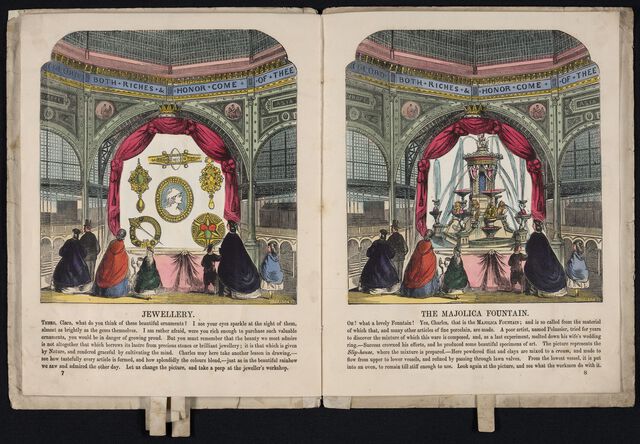
This spread shows the dissolving views for “Jewellery” and “The Majolica Fountain” before pulling the tab, two of the eight displays from the Great Exhibition of 1851 represented in this novelty book. On the left, beautiful jeweled ornaments float on a curtained stage. After pulling the tab, these pieces will be replaced by a jewelry workshop. The right shows “The Majolica Fountain,” a large ornamental fountain spraying water, which the pull tab replaces with the waterworks. In the dialogue underneath the images, a parent viewing these displays from the audience explains both the finished products of industry and the workshops where they were created to Clara and Charles. For all eight displays in this book, the frame around the moveable image remains identical, showing the backs of adults and children who watch the display, which gives the impression that the book's users are among the crowd listening to the informed parent.
- typeImage
- created on
- file formatjpg
- file size755 KB
- container titleA Visit to the Exhibition: In Eight Changeable Pictures Showing its Beautiful Objects of Art and How They were Made: Sculpture, Pottery, Jewellery, Carved Wood, Glass, Metal Work, Silk Fabrics, Machinery (London: Dean & Son, between 1857 and 1865).
- creditCotsen Children’s Library, Courtesy of Princeton University Library
- rightsPublic Domain
We use cookies to analyze our traffic. Please decide if you are willing to accept cookies from our website. You can change this setting anytime in Privacy Settings.